
Volume analysis guide 2026: master NinjaTrader 8 techniques
Professional traders often struggle to extract actionable intelligence from volume data on NinjaTrader 8, leading to missed opportunities and false breakout signals. Misreading volume patterns costs traders both capital and confidence. This guide delivers a structured methodology to master advanced volume analysis using NinjaTrader 8’s professional indicators, empowering you to improve entry precision, reduce false signals, and enhance overall strategy performance through rigorous volume interpretation techniques.
Table of Contents
- Prerequisites And Setup For Advanced Volume Analysis
- Core Steps For Volume Analysis Implementation
- Common Mistakes And Pitfalls In Volume Analysis
- Alternative Approaches And Tradeoffs In Volume Analysis
- Expected Results And Outcome Metrics For Advanced Volume Analysis
- Explore Advanced Ninjatrader 8 Volume Indicators
- FAQ
Key takeaways
| Point | Details |
|---|---|
| Entry precision improvement | Advanced volume analysis enhances trade entry accuracy by up to 20% when properly implemented. |
| Essential setup requirements | High-level market depth data feeds with 200+ levels and appropriate hardware ensure reliable analysis. |
| Multi-indicator confirmation | Combining volume profile, delta divergence, and order flow reduces false signals by approximately 35%. |
| Common calibration errors | Misconfigured session times and insufficient market depth lead to unreliable volume interpretations. |
| Performance validation necessity | Backtesting volume-based strategies before live deployment is critical for risk management and consistency. |
Prerequisites and setup for advanced volume analysis
Successful volume analysis on NinjaTrader 8 requires specific technical infrastructure and foundational knowledge. Without proper preparation, even sophisticated indicators deliver unreliable signals that undermine trading performance.
You need NinjaTrader 8 installed with a lifetime license to access the platform’s full indicator capabilities. Your data feed must provide at least 200 depth levels for granular volume and order flow analysis, distinguishing institutional liquidity from retail noise. Standard feeds offering only 10-20 depth levels provide insufficient resolution for professional volume interpretation.
Hardware specifications directly impact real-time processing reliability. Minimum 200 levels of market depth data feed and a 4-core CPU with 16GB RAM are recommended for effective volume analysis. Inadequate processing power causes indicator lag during volatile market conditions, creating timing errors that negate analytical advantages.
Before implementing advanced techniques, establish solid comprehension of core concepts:
- Volume represents actual transaction quantities at specific price levels
- Delta measures buying versus selling pressure through bid/ask execution analysis
- Price action patterns contextualize volume anomalies within market structure
- Order flow tracks the directional sequence of aggressive buy and sell orders
Verify your data feed’s compatibility with both NinjaTrader 8 and Trader Algorítmico indicators. Not all providers support the depth requirements necessary for institutional-grade analysis. Review the NinjaTrader 8 setup guide to confirm proper connection protocols.
The NinjaTrader 8 Market Analyzer provides essential workspace organization for monitoring multiple volume indicators simultaneously across different instruments. Configure custom columns displaying volume profile metrics, delta values, and order flow imbalances for efficient signal screening.
Pro Tip: Configure session times precisely to match your trading instruments. Volume calculations reset at session boundaries, and misalignment causes artificial spikes or gaps that distort interpretation. Futures traders must distinguish between electronic and pit trading hours to avoid volume misinterpretation during transitions.
Follow the detailed steps for installing NinjaTrader 8 indicators to ensure correct implementation of volume analysis tools. Improper installation prevents indicators from accessing necessary market depth data streams.
| Component | Minimum Requirement | Recommended Specification |
|---|---|---|
| CPU | 4-core processor | 6-core or higher |
| RAM | 16GB | 32GB for multiple instruments |
| Market Depth | 200 levels | Full order book access |
| Data Feed Latency | Under 50ms | Under 20ms for scalping |
| Storage | SSD | NVMe SSD for tick data |
Core steps for volume analysis implementation
Implementing volume analysis systematically ensures consistent signal quality and reproducible results. Follow this structured approach to integrate volume indicators into your NinjaTrader 8 workflow.
Step 1: Connect High-Level Market Depth Feed
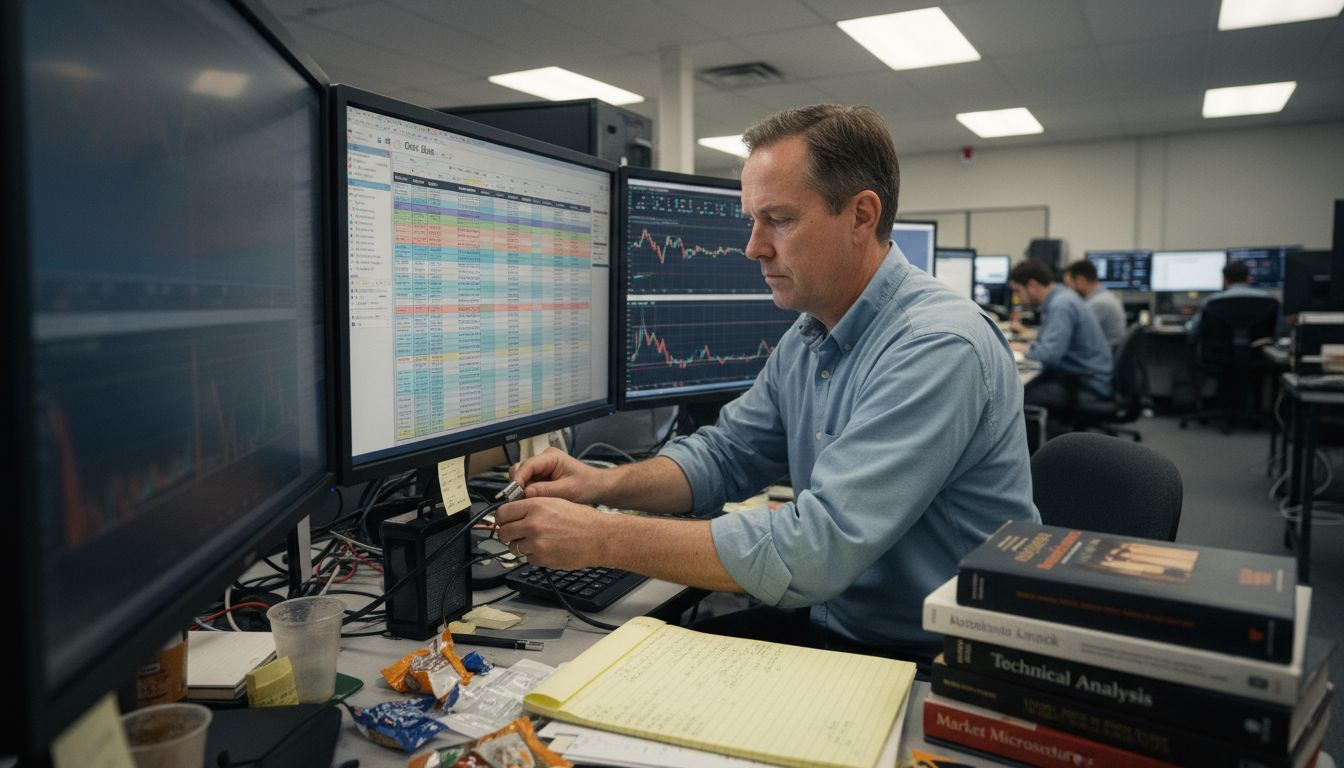
Establish connection to a data provider offering comprehensive order book visibility. Standard retail feeds lack the depth resolution required for institutional liquidity analysis. Verify your feed transmits at least 200 price levels above and below current market price in real time.
Step 2: Install and Configure Volume Indicators
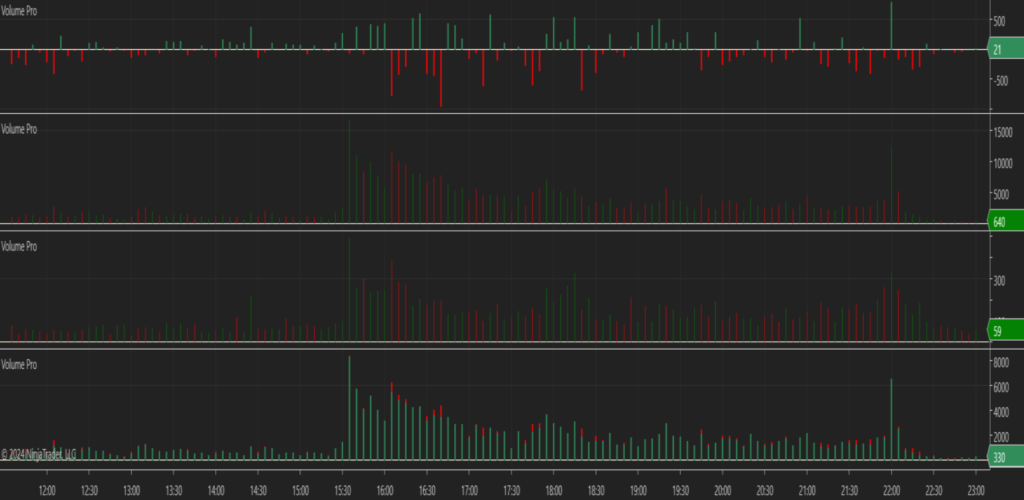
Install the Volume Profile Pro indicator and Delta Divergence indicator following standard NinjaTrader 8 installation procedures. These tools form the analytical foundation for professional volume interpretation. Access indicator properties to customize visual parameters, calculation periods, and alert thresholds matching your trading timeframe.
Step 3: Calibrate Session Alignment
Precise session calibration prevents volume calculation errors. Open each indicator’s settings and define session start/end times matching your target market’s official trading hours. Misalignment by even 15 minutes creates artificial volume anomalies at session boundaries that trigger false signals.
Step 4: Analyze Combined Signal Confirmation
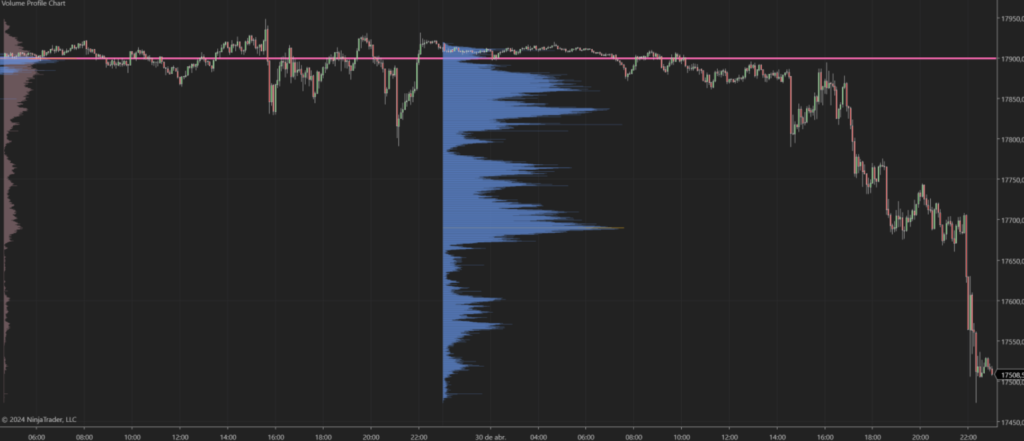
Combining multiple volume indicators drastically reduces false signals and enhances trade signal validation. Volume profile identifies price levels with significant historical transaction activity, revealing support and resistance zones backed by actual liquidity. Delta divergence exposes discrepancies between price movement and underlying buying/selling pressure, signaling potential reversals before price confirmation.
Order flow analysis adds the final confirmation layer by tracking aggressive order execution sequences. When volume profile shows high-volume nodes, delta divergence indicates institutional accumulation, and order flow confirms sustained directional pressure, signal reliability increases substantially.
Step 5: Backtest Before Live Deployment
Use the NinjaTrader 8 Strategy Builder to validate volume-based entry and exit rules across historical data. Backtesting reveals strategy robustness under varying market conditions and prevents costly live trading mistakes. Document performance metrics including win rate, profit factor, maximum drawdown, and average trade duration.
Best practices for indicator configuration:
- Set volume profile period length to match your typical holding timeframe
- Configure delta calculation intervals based on instrument tick volume characteristics
- Adjust order flow imbalance thresholds to filter noise while capturing significant flows
- Enable visual alerts for predetermined volume anomaly conditions
- Synchronize all indicator calculation periods to avoid temporal misalignment
Review the comprehensive volume profile reading guide to interpret profile shapes, point of control locations, and value area distributions effectively. Understanding these patterns transforms raw volume data into actionable trading intelligence.
Pro Tip: Update indicator versions and data feed connections regularly. Software improvements often enhance calculation accuracy and processing efficiency. Outdated versions may contain bugs affecting signal reliability, while stale data connections introduce latency that degrades real-time analysis quality.
Common mistakes and pitfalls in volume analysis
Even experienced traders make critical errors when interpreting volume signals, undermining otherwise sound strategies. Recognizing these mistakes helps you avoid costly misinterpretations.
Trading exclusively on volume spikes without contextual confirmation represents the most frequent error. Relying solely on volume spikes increases false breakout risks by 50%, emphasizing need for multi-indicator confirmation. Sudden volume increases occur for numerous reasons including news events, algorithmic execution, or temporary liquidity imbalances that reverse quickly without sustainable price movement.
Incorrect indicator calibration to session times generates unreliable signals by misaligning volume calculations with actual market activity periods. When your indicator resets at different times than exchange-defined sessions, volume aggregations span inappropriate time windows. This creates artificial patterns unrelated to genuine supply/demand dynamics.
Ignoring market depth beyond the top 20 levels produces incomplete liquidity perception. Surface-level order book visibility misses substantial institutional orders resting deeper in the queue. Professional traders position large orders away from current price to avoid detection, making deep market analysis essential for understanding true liquidity distribution.
Neglecting to backtest volume strategies before live trading increases risk exposure unnecessarily. Untested strategies often perform differently under real market conditions compared to theoretical expectations. Historical validation identifies parameter weaknesses and market regime dependencies before capital commitment.
Practical solutions to avoid these pitfalls:
- Always combine volume profile, delta analysis, and order flow data before trade execution
- Verify indicator session settings match official exchange trading hours exactly
- Utilize data feeds providing minimum 200 depth levels for comprehensive order book visibility
- Conduct thorough backtesting across multiple market conditions and timeframes
- Document every trade setup including which volume indicators confirmed the signal
Align your indicator parameters with the delta interpretation guide to understand how buying and selling pressure manifests across different market structures. Delta patterns behave differently during trending versus ranging conditions, requiring contextual interpretation rather than mechanical rules.
Always verify volume anomalies with order flow and delta divergence before taking trades to avoid costly mistakes. A single confirmation source provides insufficient evidence for high-probability setups. Professional traders demand convergence across multiple analytical dimensions before committing capital, reducing emotional decision-making and improving consistency.
Alternative approaches and tradeoffs in volume analysis
Different volume analysis methodologies suit varying trading styles and infrastructure capabilities. Understanding these tradeoffs helps you select optimal techniques matching your specific requirements.
Stand-alone volume spike trading offers the fastest signal generation but suffers from elevated false breakout rates. This approach identifies sudden volume increases and assumes directional continuation. Speed advantages benefit scalpers seeking immediate entries, but lack of confirmation filters produces numerous losing trades when spikes result from temporary imbalances rather than sustained institutional participation.
Composite methods combining volume profile with delta divergence substantially improve accuracy at the cost of greater data depth and processing requirements. Multi-indicator confirmation reduces false signals by filtering setups lacking convergent evidence across different analytical dimensions. This approach demands higher-quality data feeds and more powerful hardware, increasing operational costs but delivering superior signal reliability for discretionary and algorithmic traders.
Integrating machine learning models with volume indicators enables automated pattern recognition and trend-following strategies. Algorithmic systems identify complex volume relationships humans miss through manual observation, enhancing consistency and removing emotional biases. Implementation requires programming expertise and significant computational resources, making this approach best suited for quantitatively oriented traders and institutional desks.
Latency sensitivity versus data depth represents a critical tradeoff. Scalpers prioritize minimal latency over comprehensive depth, accepting reduced accuracy in exchange for execution speed. Swing traders and algorithmic systems benefit more from deep order book visibility, tolerating slightly higher latency to gain institutional liquidity insights unavailable through surface-level data.
| Approach | Speed | Accuracy | Data Requirements | Best For |
|---|---|---|---|---|
| Volume Spike Only | Fastest | Moderate | Basic | Scalping |
| Multi-Indicator Composite | Moderate | High | 200+ depth levels | Discretionary/Algo |
| Machine Learning Integration | Variable | Highest | Full order book + historical | Quantitative firms |
| Profile + Price Action | Moderate | High | Standard + volume history | Swing trading |
Scenarios favoring each methodology:
- Scalping benefits from rapid volume spike detection with tight stop losses compensating for lower accuracy
- Algorithmic trend following leverages composite indicator confirmation to reduce drawdowns and improve consistency
- Discretionary trading combines volume profile with price action for context-rich decision-making
- Quantitative analysis employs machine learning to process vast datasets identifying non-obvious volume patterns
- Position trading focuses on volume profile nodes marking significant accumulation/distribution zones
Expected results and outcome metrics for advanced volume analysis
Quantifying performance improvements helps you evaluate volume analysis effectiveness and set realistic expectations for strategy development.
Properly implemented multi-indicator volume analysis on NinjaTrader 8 produces measurable enhancements across key performance metrics. Entry precision improvements reach approximately 20% for both manual and algorithmically executed trades. This improvement stems from filtering low-probability setups lacking volume confirmation, concentrating capital deployment on higher-conviction opportunities.
Annual returns for robust volume-based automated strategies typically range between 12% and 18% depending on market conditions and leverage utilization. These returns represent risk-adjusted performance from systematic approaches validated through extensive backtesting. Individual results vary based on strategy complexity, instrument selection, and risk management parameters.
Advanced volume analysis can improve entry precision by 20%, reduce false signals by 35%, and lower drawdown durations by 25%. False signal reduction around 35% occurs through integrated volume and order flow confirmation requirements. By demanding convergence across multiple analytical dimensions, traders eliminate setups driven by temporary noise rather than sustainable supply/demand imbalances.
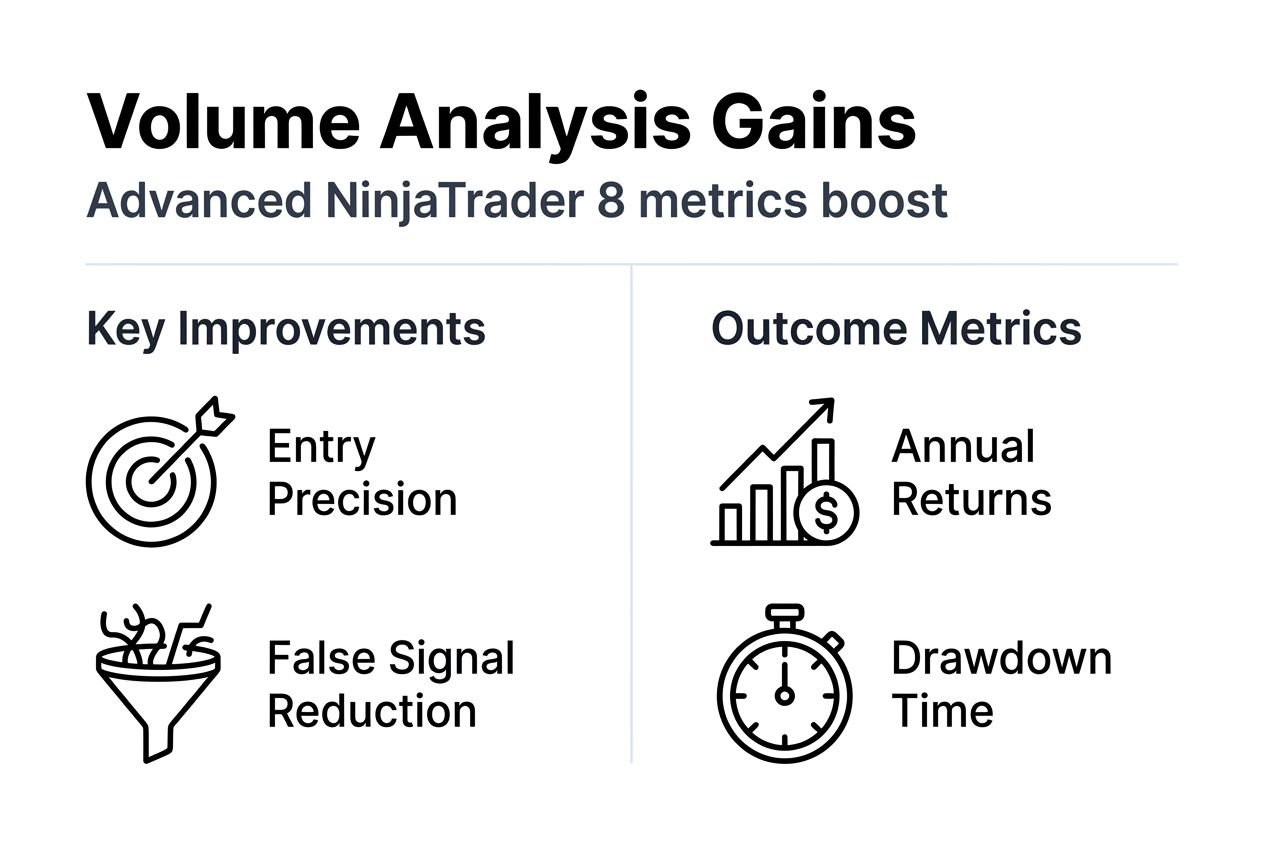
Drawdown duration reductions of approximately 25% enhance overall risk management and psychological sustainability. Shorter drawdown periods result from earlier exit signals when volume patterns indicate weakening directional momentum. This improvement preserves capital during unfavorable market conditions and maintains trader confidence through inevitable losing streaks.
Performance expectations by strategy type:
- Intraday volume-based scalping: 8-12% monthly returns, 15-20% maximum drawdown
- Swing trading with volume confirmation: 12-18% annual returns, 10-15% maximum drawdown
- Algorithmic trend following: 15-25% annual returns, 20-25% maximum drawdown
- Discretionary position trading: 10-15% annual returns, 12-18% maximum drawdown
| Metric | Without Volume Analysis | With Advanced Volume Analysis | Improvement |
|---|---|---|---|
| Entry Precision | 65% | 78% | +20% |
| False Signal Rate | 45% | 29% | -35% |
| Average Drawdown Duration | 12 days | 9 days | -25% |
| Annual Return (Automated) | 10% | 15% | +50% |
| Win Rate | 52% | 61% | +17% |
These metrics represent averages from professionally developed strategies using comprehensive volume analysis techniques. Individual performance depends on execution discipline, risk management adherence, and continuous strategy refinement based on changing market dynamics.
Explore advanced NinjaTrader 8 volume indicators
Trader Algorítmico provides specialized volume analysis tools designed specifically for professional NinjaTrader 8 traders seeking institutional-grade market intelligence. These indicators integrate seamlessly with the methodologies covered throughout this guide, enabling immediate implementation of advanced volume techniques.
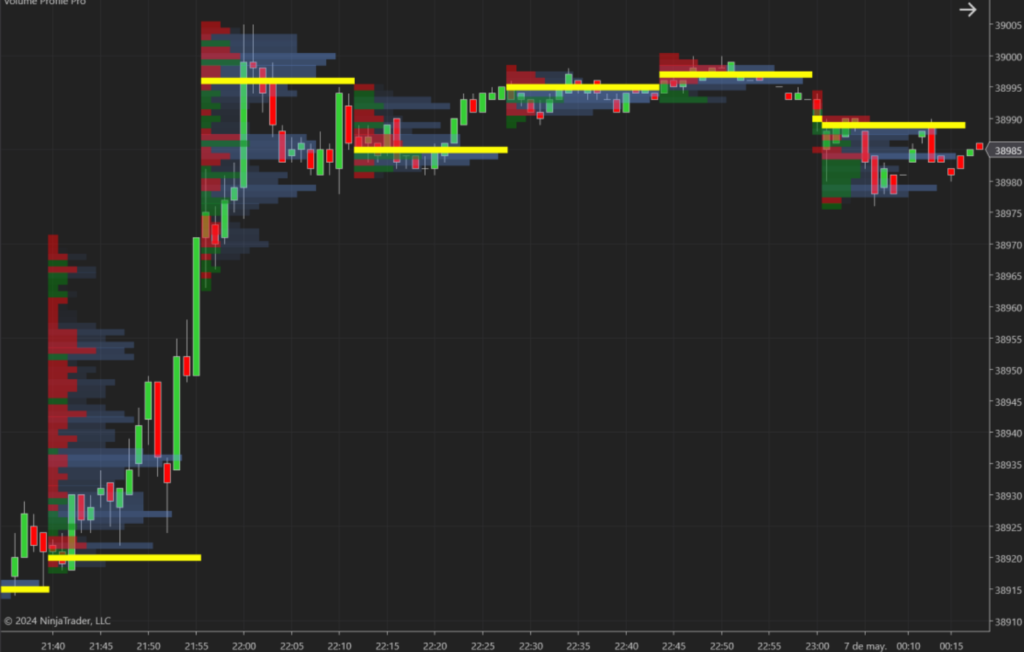
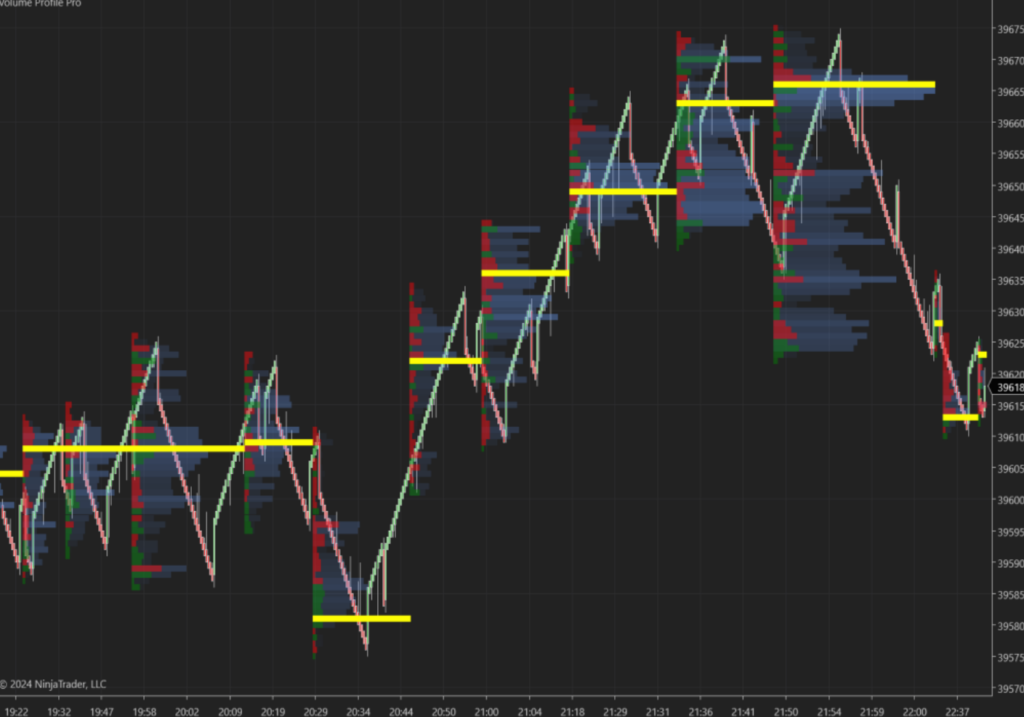
The Volume Profile Pro indicator delivers comprehensive price-volume distribution analysis with customizable calculation periods and visual representations. Identify high-volume nodes, value areas, and point of control locations that institutional traders use for positioning decisions.
Delta Divergence exposes hidden buying and selling pressure discrepancies before price confirmation, providing early reversal signals that improve timing accuracy. The Order Flow indicator tracks aggressive order execution sequences, revealing directional conviction behind price movements.
Key benefits of Trader Algorítmico volume tools:
- Precision calibration for NinjaTrader 8’s calculation engine ensuring accurate real-time processing
- Real-time insights from deep market data streams processing 200+ order book levels
- Backtesting compatibility enabling historical strategy validation before live deployment
- Lifetime licenses with continuous updates and technical support
- Seamless integration with existing NinjaTrader 8 workspaces and chart configurations
Explore these professional indicators to enhance your volume analysis capabilities and implement the strategies detailed in this guide effectively.
FAQ
What hardware specifications are essential for smooth volume analysis on NinjaTrader 8?
Minimum 4-core CPU and 16GB RAM are recommended for real-time processing of high-depth market data without performance degradation. This setup ensures stable and responsive indicator calculations on NinjaTrader 8 during volatile market conditions. Insufficient processing power causes indicator lag that creates timing errors undermining analytical advantages.
How do I calibrate volume indicators to market session times effectively?
Set indicator session start and end times to match your target market hours precisely, avoiding any mismatch that distorts volume readings. Use NinjaTrader 8’s session manager tools as detailed in the configuration guide to define accurate trading periods. Even 15-minute misalignments create artificial volume anomalies at session boundaries.
What are the best practices to reduce false signals in volume-based trading?
Combine volume profile, delta divergence, and order flow data to confirm signals before trade execution. Backtest strategies thoroughly across multiple market conditions before live deployment to validate robustness. Avoid trading based solely on volume spikes, as this approach increases false breakout risks substantially without multi-dimensional confirmation using delta divergence validation.
Can volume analysis work effectively for both futures and stock trading?
Yes, volume analysis principles apply universally across asset classes, though implementation details vary. Futures markets typically provide superior order book depth and transparency compared to equities, making volume signals more reliable. Stock traders must account for fragmented liquidity across multiple exchanges when interpreting volume data.
How long does it take to become proficient in advanced volume analysis techniques?
Most traders achieve functional proficiency within three to six months of dedicated study and practice. Mastery requiring intuitive pattern recognition typically develops after 12-18 months of consistent application. Regular backtesting, journaling trade setups, and reviewing volume patterns across different market conditions accelerate the learning curve significantly.